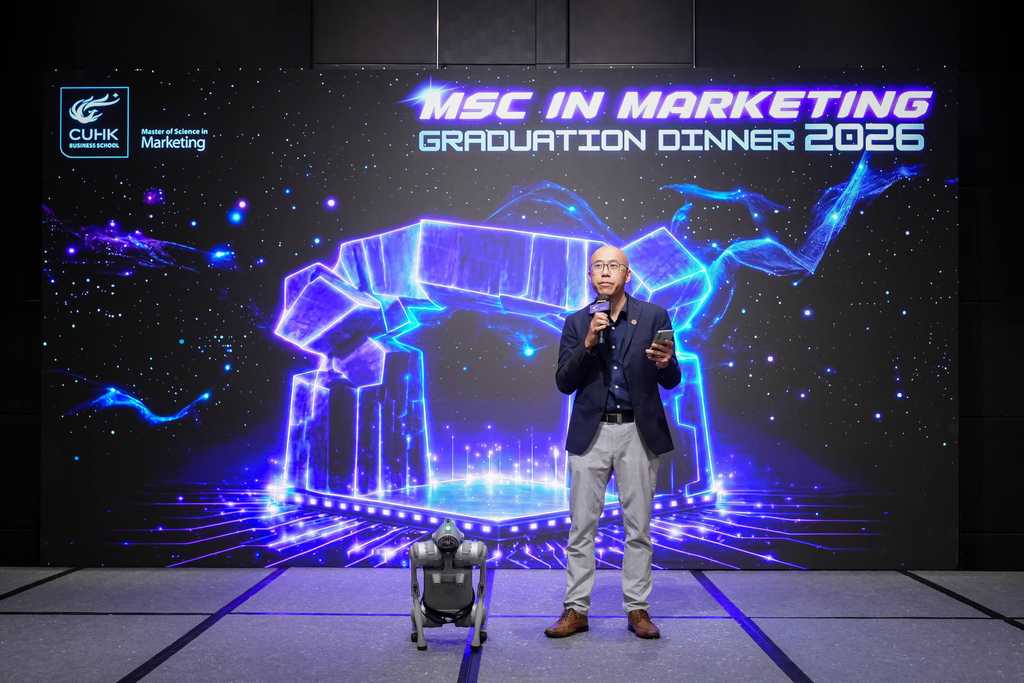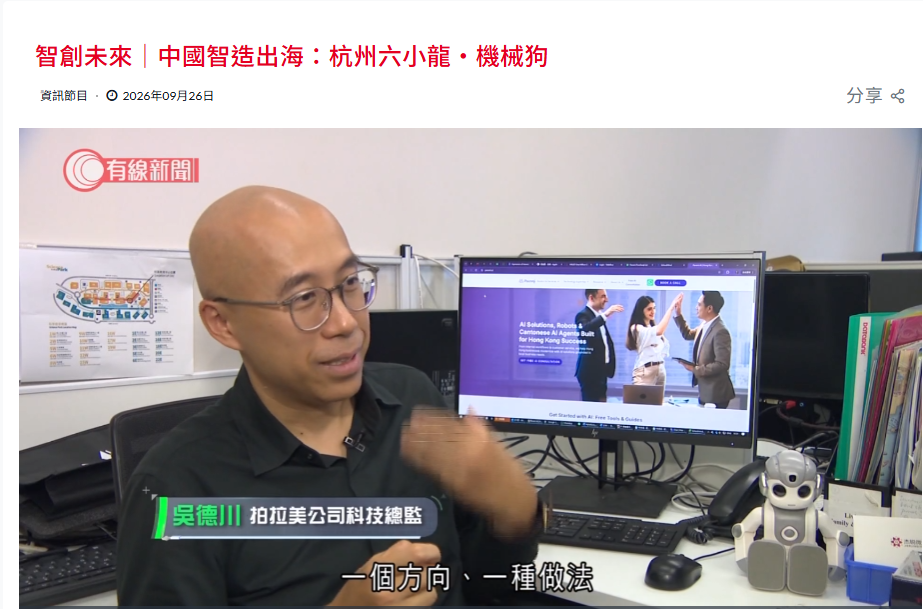
On 26 September 2026, i-CABLE’s programme InnoAction aired China's Smart Manufacturing Going Global: Hangzhou's Six Little Dragons and Robot Dogs. Derek Ng, Founder and Technology Director of Parami AI, spoke about how robotics developed in mainland China is moving outward, and why Hong Kong sits in a different position from the home market those companies grew up in.
Derek’s point on Hong Kong is specific. The structure here is different from the mainland. He used education as the example and compared it to guerrilla warfare: demand breaks into many small segments. One product, one direction and one method will not cover all of them.
That is a deployment problem, not a branding line. A robot that works in a mainland showroom still has to be fitted to the room it enters in Hong Kong: the task, the language, the user and the workflow. In a school, that means the grade, the subject and what the teacher does after the demo. In a business, it means the job the robot is actually there to do. Parami’s work starts at that fit. Cantonese AI agents, industry knowledge and the physical robot have to be set up for one use, not shipped as a single package for every sector.
Derek also described a shift in how mainland robotics and AI companies grow. An older pattern was to win the domestic market first, sometimes only the provinces next door, and look outward later. What he sees now in leading, fast-rising robotics and AI firms is different. Many of them draw a large strategic map at the beginning. Overseas is part of the first plan, not a later chapter.
Hong Kong shows up in that plan as a springboard and a bridge. A company can use the city to reach further markets more quickly. The bridge only works if someone on this side understands the local requirement. Derek put it modestly: Hong Kong may understand those needs a little better.
He grouped the current wave as robots, robot dogs, embodied intelligence, and the pairing of people with brain-computer interfaces. The list matters less than the last line. These technologies settle into different industries in different forms.
A robot dog in a school, a guide robot in a venue, and an AI agent on a service desk are not one product with three stickers. Each one needs a local layer: what the machine is allowed to do, which language it speaks, and how a person stays in charge of the outcome. That is the practical reading of his interview. Mainland robotics is moving faster and thinking globally earlier. Hong Kong’s value is knowing which version of that technology belongs in which setting.
Want to see what fits your setting?
A classroom, a venue and a service counter need different setups. Talk to Parami AI about matching the robot, the Cantonese AI agent and the workflow to one job.